
On the Bank: Get the Most from Your Day Chalkstream Fly Fishing
So you’ve got all the latest gear and arrive at a beautiful fishery. Where do you start? What should you be thinking about?
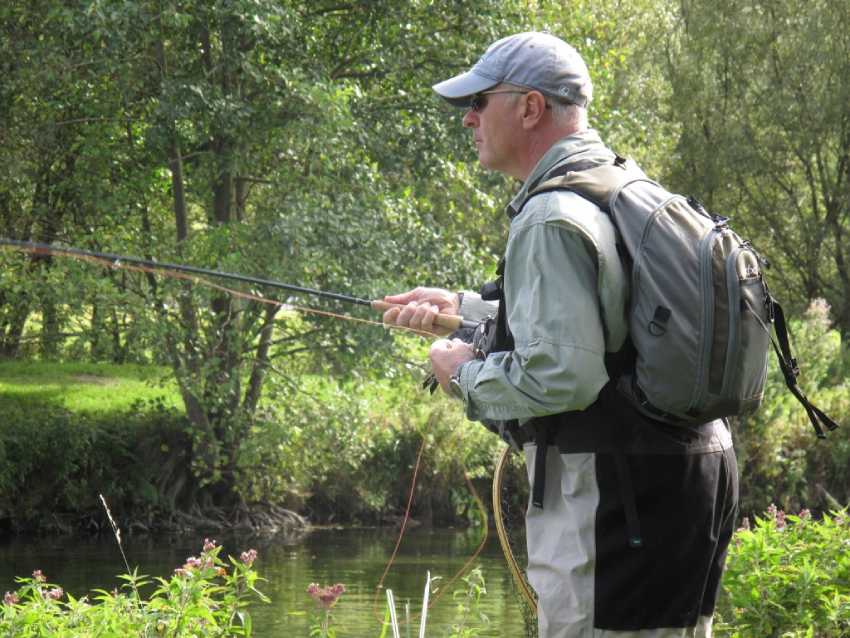
Well, first things first, make sure that you’re wearing neutral coloured clothing to help you to blend into the countryside and wear a hat and polarised glasses. Both of the latter will protect you from the sun and high speed hooks as well as help you to spot the fish. I always wear long trousers regardless of the weather. In Hampshire there are lots of ticks and many carry Lymes Disease which can be debilitating – best avoided!
Work your way upstream, not downstream
Find your beat and always work your way upstream, not downstream. It sounds obvious, but I’ve seen too many anglers going the wrong way. In a stream, fish face into the current and they look, mostly, forward and up. So approaching them from behind will give you the best chance of seeing them, before they see you. I rarely blind-cast, hoping to encounter a fish. Rather, I will make my way upstream carefully, looking for fish to cast to.
Spotting the fish
But spotting the fish is not always easy. It would be lovely if the surface was constantly dimpled with happily rising fish, but, in my experience this is rare. More often than not, they are somewhere sub-surface eating invertebrates. They are remarkably well camouflaged and can be ‘lying’ very still in the water. To give yourself the best chance of seeing them, think about the light. Where’s the sun? Is there a glare on the surface? If so, can I fish from the other bank. If the sun’s low, am I going to cast a fish-scaring shadow onto the water? If there’s not much light penetrating the water, for example on an overcast day, or if the water’s coloured, perhaps focus more on looking further upstream for rising fish giving away their positions.
As you make your way upstream, move really slowly, especially at the more likely looking spots. Use the available cover to hide you as best you can. Trees behind you, bushes and the fringe in front of you will all help you to stay unseen. Often it’s the fish’s tail you see first as this is an angular, dark shape and will usually stand out against the background. Consciously looking for this will help.
Once you see a fish either stand still or back away slightly so as not to spook it. You may want to crouch down or get on your hands and knees. I get very muddy knees! Observing the fish for a short while will, hopefully, give you an idea of whether it’s feeding and what it’s feeding on. It’s also uncanny that when you stay still and observe, you will often see other fish come into view. They are either already there and you just haven’t previously managed to focus on them, or often a fish will move, giving away its position as it moves near to your target fish. Now it’s time to have a cast.
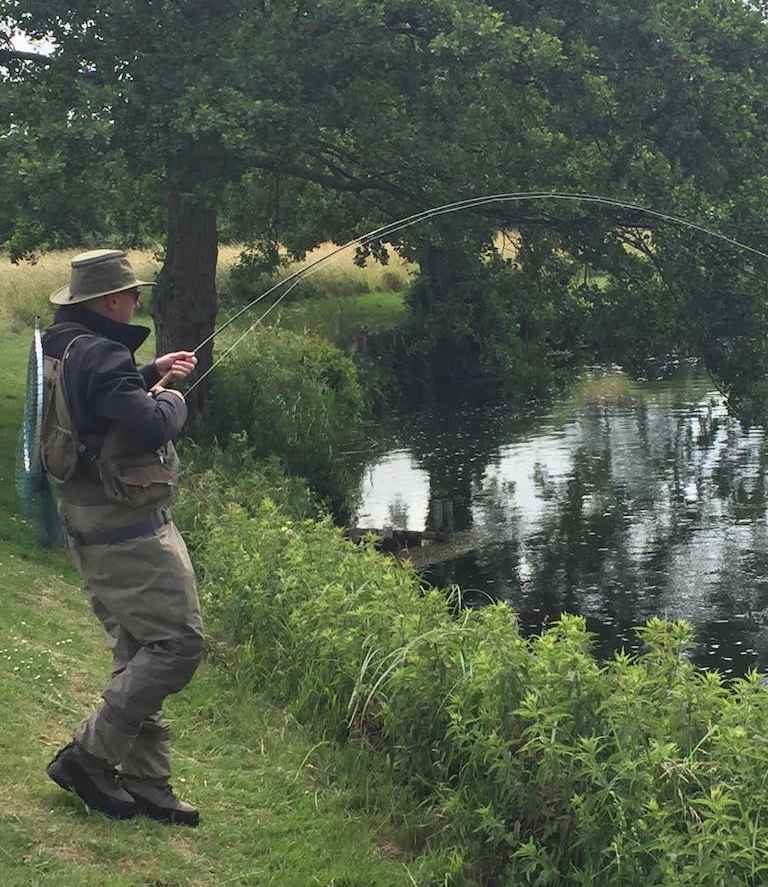
I’m going to talk about flies and how to fish them in a later article, but if you don’t manage to attract the fish with your fly, change patterns: a dry, an emerger, a nymph. Change size, colour or depth. Sometimes you just have to move on if the fish isn’t interested. You may have spooked it without knowing – sometimes they just sit there ignoring you, especially if they’ve seen a few flies already. Sometimes it’s more obvious they’ve been spooked because they swim off to hide; maybe you pricked it with a hook that didn’t stick or you simply scared it with a sloppy cast. Either way, fear not, there will be more fish upstream and, once rested, you can come and have another go for your target fish.
I was once snapped off by a lovely 4lb fish but went back later in the day and caught it on the same pattern as I’d hooked it with before. How can I be sure it was the same fish…? I got my fly back. How long to rest the water is debatable and everyone will have a view. I like to leave it as long as I can, but at least 30 minutes, preferably a lot more.
To get back to the start of your beat you will obviously need to move downstream. If you do this close to the water’s edge you risk spooking the whole beat. If possible you should take a route completely away from the stream. If you must re-trace your steps try to do so as far from the edge as you can, staying out of sight. You must NOT walk downstream on someone else’s beat!
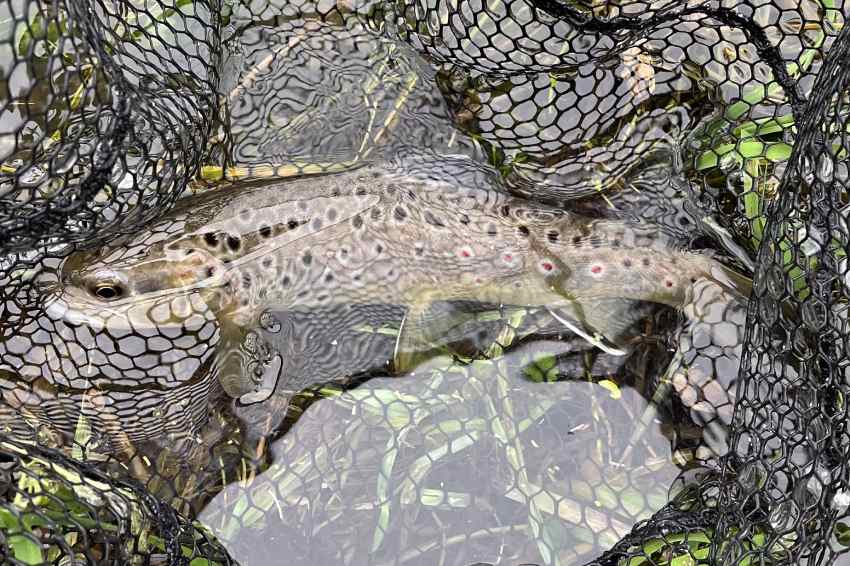
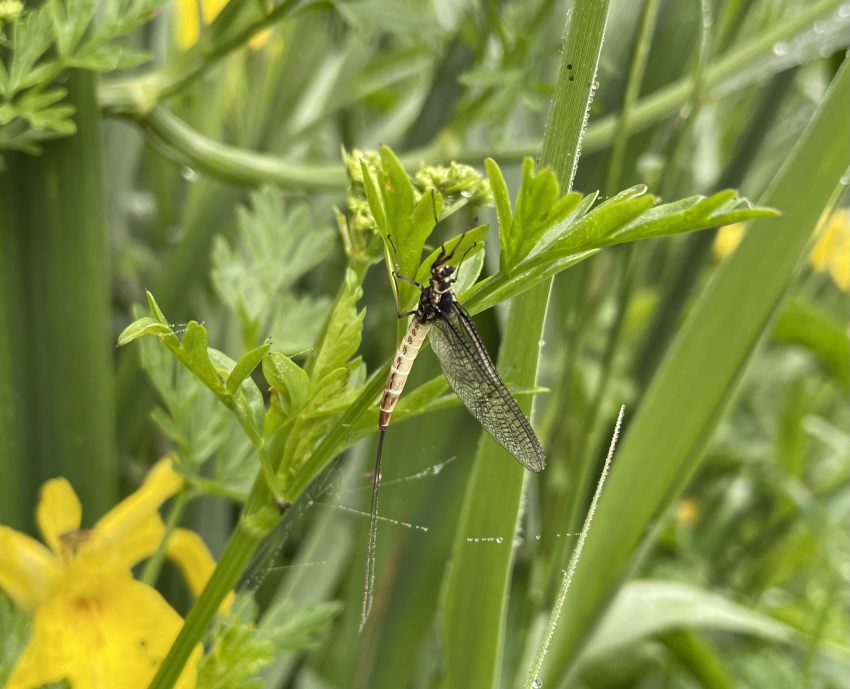
Hopefully, the few tips I’ve given will help you get the most out of your day on the river, but one last thought: just sit quietly and watch the water. Not only will you see fish, you will see so much of the natural chalk stream beauty and wildlife that you may easily miss as you stalk your quarry.
About Jem
As a competition trout angler, Jem Dunn was Inter-Services Champion in the late 90’s but his most recent passion is bonefishing in the Caribbean. He has a rod at Timsbury on the Test, is a member of the Barton Stacey Fly Fishing Club and fishes on the Itchen and Meon as a member of the Portsmouth Service Fly Fishing Association.
